Recruitment in LATAM is at an inflection point. This isn't a prediction — it's what the data from the last 18 months shows: accelerated AI adoption, shrinking HR teams, and candidates expecting faster, more transparent processes.
In 2023, talking about "AI interviews" sounded like a tech company experiment. In 2026, it's the baseline expectation of any reasonably serious hiring process in the region. LinkedIn reports that 74% of HR leaders in Latin America plan to increase their investment in recruitment technology this year. Gartner projects that 80% of sourcing and initial screening functions will be automated by end of 2026 in companies with over 100 employees.
The problem is that many recruiting teams still operate with 2019 tools and workflows. This isn't criticism — it's a window of opportunity. Those who adapt now will have an enormous competitive advantage: less time per process, better candidates, and significantly lower operating costs.
In this guide, I'll walk you through the 7 trends that will define recruiting in LATAM during 2026 and what you can do with each one.
Contents
- Why 2026 is different from previous years
- Trend 1: AI moves from tool to process standard
- Trend 2: Candidates expect a complete digital experience
- Trend 3: Competency-based interviews get automated
- Trend 4: Data replaces "gut feeling"
- Trend 5: The recruiter becomes a strategist
- Trend 6: Hiring speed becomes a competitive advantage
- Trend 7: Skills evaluation surpasses credential evaluation
- The specific LATAM context
- What won't change
- Mistakes when adapting to change
- FAQ about the future of recruiting
Why 2026 is different from previous years
Every year there are predictions about "the future of recruiting." Most don't come true on schedule. So why is 2026 different?
Three factors converged simultaneously:
1. AI models reached a point of practical maturity. This isn't theory — there are platforms today that process 200 CVs in 4 minutes with 94% accuracy, or conduct 50 interviews simultaneously at 3 AM. That was impossible two years ago.
2. Costs dropped to the point of mass access. What in 2022 required an enterprise investment of USD $5,000/month is now available from USD $79/month. This democratized the technology for small consulting firms, startups, and SME HR teams.
3. Market pressure accelerated. A candidate who sends their CV in 2026 expects a response within 24-48 hours. The one who waits a week has already accepted another offer. Teams that don't automate the first stage of the process lose candidates simply through tardiness.
The combination of mature technology + democratic access + market pressure is what makes 2026 the year many organizations will cross the adoption line.
Trend 1: AI moves from tool to process standard
In 2024, AI in recruitment was a differentiating feature. Companies that used it could tout it as a competitive advantage. In 2026, not using it is the exception that raises eyebrows.
This shift has a concrete practical implication: AI stops being an "additional layer" added to the existing process and becomes the base architecture of the workflow.
What does this mean in practice? The standard 2026 process looks like this:
- Candidate applies
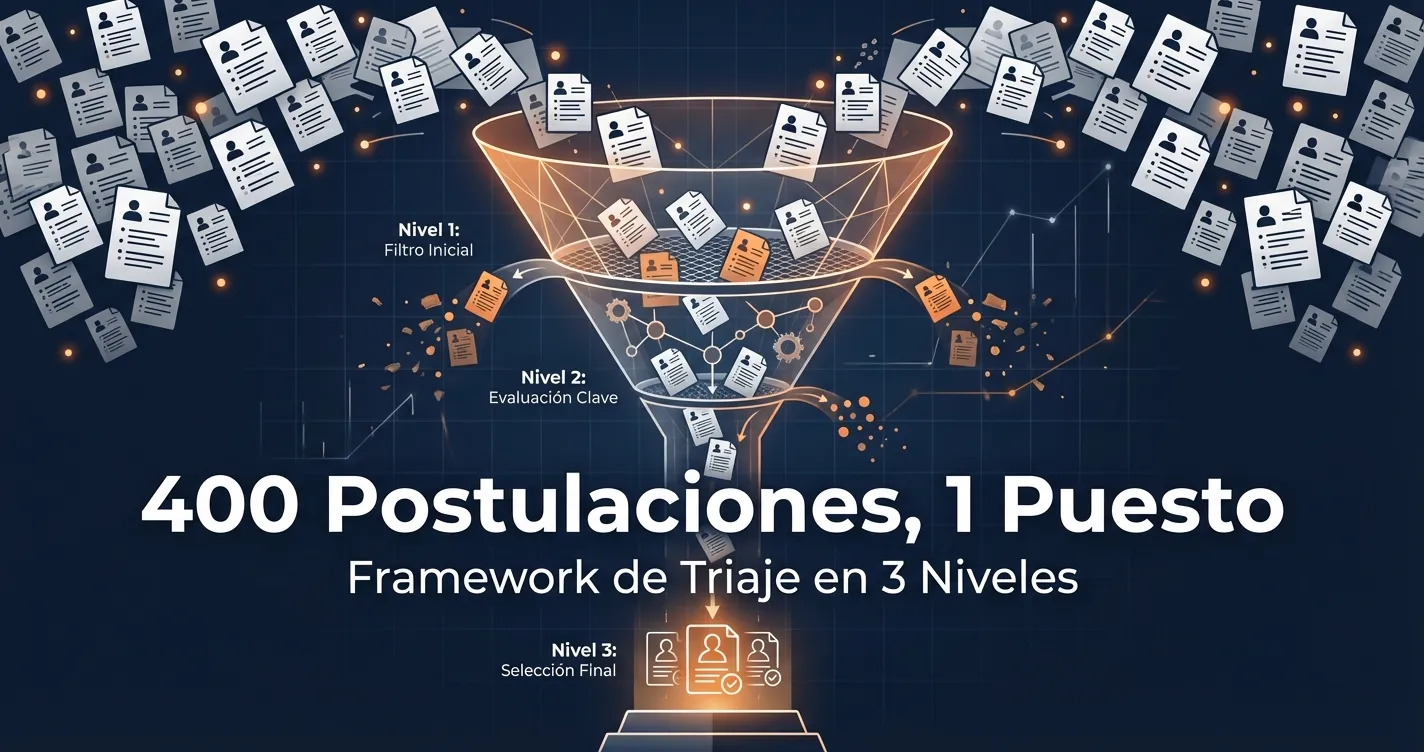
- AI reads the CV and evaluates it against job requirements in minutes (not days)
- If they pass the threshold, AI automatically schedules a voice interview
- The human recruiter receives a shortlist of 5-8 candidates with scores, transcripts, and recommendations
- The recruiter conducts final interviews with candidates already pre-evaluated objectively
The recruiter didn't disappear — they changed roles. Instead of reading 200 CVs, they analyze 5 pre-qualified candidates. Instead of conducting 20 interviews to find 3 good ones, they do 5 interviews with candidates who've already demonstrated basic competency.
The AI screening system running this first stage isn't magic — it's well-defined criteria executed consistently at scale.
Trend 2: Candidates expect a complete digital experience
Candidates entering the job market in 2026 grew up handling paperwork via WhatsApp, signing contracts via DocuSign, and taking classes via Zoom. Their bar for digital experience is high.
A hiring process that involves "send your CV by email" or "wait for us to call you to schedule the interview" no longer generates the uncomfortable friction it used to — the most qualified candidates simply skip it entirely.
LinkedIn Career Research data is conclusive: 83% of candidates under 35 in LATAM discard applications when the process feels "disorganized or slow." And "slow" for this group means more than 72 hours without a response.
What does the 2026 candidate expect?
- Immediate confirmation upon applying, not silence
- Clear timeline of process stages from day one
- Flexible interview they can do from their phone, at whatever time suits them
- Feedback even if they didn't advance (even if automated)
- A process that ends — not being left in limbo for weeks without updates
The candidate experience in AI interviews solves several of these points automatically: instant confirmation, interview available 24/7, and a process that moves forward without depending on the recruiter's schedule.
This isn't just "protecting the employer brand." It's retaining qualified talent at the most expensive stage of the process.
Trend 3: Competency-based interviews get automated
The screening interview — that first 20-30 minute contact to see if the candidate meets basic requirements — is the most time-costly task and the one that requires the least expert judgment. That's why it gets automated first.
In 2026, first-stage interview automation becomes standard practice for:
- High-volume positions (operations, call centers, BPOs)
- Positions with verifiable technical requirements (languages, certifications, specific skills)
- Processes with multiple candidates where consistency matters more than personalization
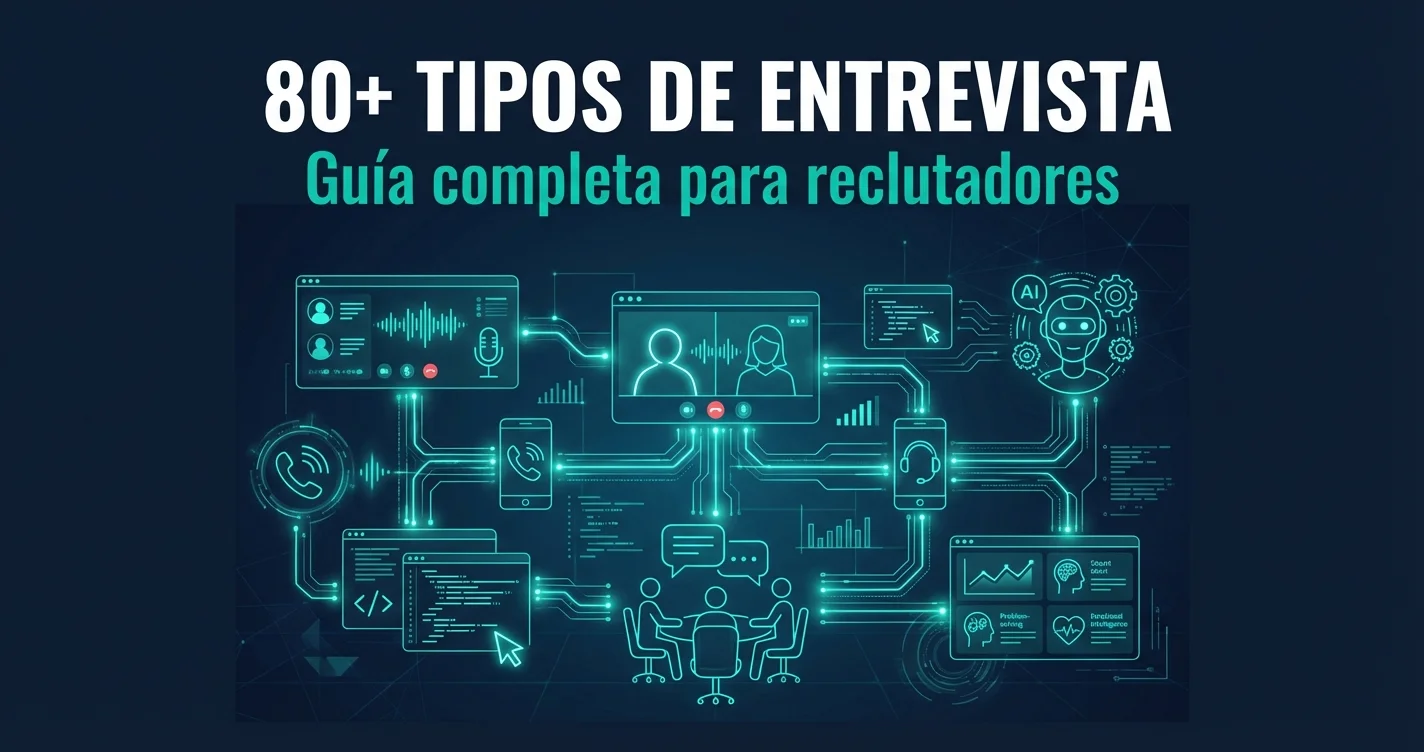
An AI voice interview can evaluate 80+ types of competency — from technical English to critical thinking — with predefined criteria and comparable results across candidates. What changes in 2026 is that this no longer requires complex implementations: it's configured in 15 minutes and works from the first candidate.
The important thing is understanding what you automate and what you don't. The final interview — where you evaluate culture, real motivation, and long-term fit — remains human. You automate the initial filter; you reserve expert judgment for when it matters most.
If you want to dive deeper into building effective automated interviews, the post on evaluating soft skills with AI is a good starting point.
Trend 4: Data replaces "gut feeling"
"Recruiter instinct" — that intuition that says "this candidate is going to work out" — has a documented problem: it predicts job performance rather poorly. A meta-analysis of 85 years of research (Schmidt & Hunter, 1998) remains the most cited reference: unstructured interviews have a predictive validity of just 0.38 out of 1.
Structured data consistently outperforms it. Cognitive skills assessments (0.51), work samples (0.54), structured behavioral interviews (0.63).
In 2026, mature recruiting teams will make decisions based on:
- Screening scores against defined criteria, not CV impressions
- AI interview results with comparable metrics across candidates
- Stage-by-stage conversion to detect funnel bottlenecks
- Quality of hire metrics at 90 days to create feedback loops
This doesn't eliminate human judgment — it improves it. The recruiter who arrives at the final interview has concrete data on the candidate and can focus the conversation on what the data doesn't capture.
If you're already measuring how long it takes you to hire, the next step is measuring the quality of what you hire.
Trend 5: The recruiter becomes a strategist
This is the trend that generates the most resistance — and also the most important to understand correctly.
Automation doesn't eliminate the recruiter. It eliminates the recruiter's administrative tasks and elevates what remains.
In 2022, 60-70% of an average recruiter's time in LATAM went to:
- Reading CVs manually
- Coordinating interviews via email and WhatsApp
- Making 20-minute screening calls for candidates who weren't going to pass
- Updating spreadsheets with each candidate's status
All of that is automatable. And when it's automated, the recruiter is left with 60-70% of their time free for what actually generates value:
- Building relationships with high-potential passive candidates
- Developing creative sourcing in niches where talent is scarce
- Advising hiring managers on the real market (not the desired one)
- Designing the employer branding strategy that attracts the right candidates
- Analyzing process metrics and proposing systematic improvements
The recruiter of 2026 who masters these capabilities will be more valuable, not less. The one who doesn't adapt will be replaced — not by AI, but by a recruiter who does use AI.
Trend 6: Hiring speed becomes a competitive advantage
In markets with low unemployment and high demand for technical talent, the speed of your hiring process determines who you end up hiring.
The numbers are clear: the average time to hire in LATAM for tech or specialized positions is 35-45 days. For high-volume operational positions, 15-20 days. The most qualified candidates in those categories receive 3-5 offers in parallel. Whoever makes an offer first, wins.
Companies that automate the first stage of the process (screening + initial interview) reduce their time-to-hire by 40-60% on average. A search that used to take 6 weeks is resolved in 3. That can be the difference between closing the candidate you want and closing the one who was still available.
Speed also has a reputational effect. A fast, well-communicated process generates positive reviews on Glassdoor and LinkedIn. A slow process without feedback generates exactly the opposite — and in 2026, the candidate who had a bad experience is going to post about it.
Trend 7: Skills evaluation surpasses credential evaluation
LinkedIn reported that job postings eliminating the university degree requirement increased 36% between 2021 and 2024 in LATAM. The "Skills-Based Hiring" movement arrived in the region with force.
Why? Because job performance data doesn't justify credential filters. A graduate from a "top" university who never applied their knowledge in a real context can perform worse than a self-taught professional with 3 years of directly applicable practical experience.
In 2026, the hiring process that will attract the best available talent will evaluate:
- Can the candidate do the job? (verifiable technical skills)
- How do they solve problems under pressure? (cognitive and situational skills)
- Will they grow in the role? (learning potential, motivation)
- Will they work well with the team? (soft skills, communication, collaboration)
The degree, the university, and the CV logos are imperfect proxies for these questions. Direct skills assessments — analyzing how candidates solve concrete problems through CVs and AI interviews — are more reliable predictors.
This trend is especially relevant for LATAM, where access to quality university education remains inequitable. Evaluating skills instead of credentials expands the available talent pool and improves hire quality at the same time.
The specific LATAM context
Global trends arrive in LATAM through a regional filter worth understanding.
High market heterogeneity. Sao Paulo, Buenos Aires, Mexico City, and Bogota have very different talent dynamics. What works for a tech search in Buenos Aires doesn't work the same for an operational search in Guadalajara. Processes need to be configurable, not generic.
High volume in operational positions. LATAM has a higher proportion of high-volume hiring processes (call centers, retail, logistics, manufacturing) compared to more developed markets. Here, automation isn't optional — processing 500 candidates per week without AI is humanly unviable unless the team is enormous.
Mobile-first penetration. 78% of candidates in LATAM access job postings from their phone. Processes that require uploading files from a computer are already exclusionary. Candidates need to be able to do everything from their phone: apply, interview, receive feedback.
Faster technology adoption than expected. Contrary to the perception that "LATAM adopts technology with a delay," in HR tech the region is adopting AI at a pace comparable to Europe. The need for efficiency in tight-budget contexts accelerates adoption.
Regulation still under construction. Brazil has its LGPD active. Argentina has Law 25,326. Mexico is updating its data regulations. Hiring processes that handle candidate data need to comply with these frameworks — and technology providers need to facilitate that compliance (explicit consent, data deletion, candidate access to their information).
What won't change
Amid all the technology trends, it's worth naming what stays the same — because it sometimes gets lost in the conversation.
The candidate is still a human being. They might interview with an AI, receive automated feedback, and advance through a digitized funnel — but the final decision to accept an offer is made by a human evaluating the company, the team, the leader, and the culture. The human experience at the moments that matter remains a differentiator.
Expert judgment in the final interview is irreplaceable. No AI can replace a good interviewer who understands the business, knows the team, and can evaluate whether someone will thrive in that specific culture. AI filters, sorts, and evaluates verifiable competencies. The human closes.
Employer brand matters as much as ever. No technology compensates for a negative reputation as an employer. If the HR team is known for not giving feedback, not meeting timelines, or running endless processes — AI speeds up the process but doesn't change perception. Employer brand is built with consistency, not tools.
Relationships with candidates remain the differentiator in scarce talent niches. For highly specialized profiles where the candidate pool is small (CTO, senior data scientists, bilingual profiles with specific experience), relationships cultivated over months remain more valuable than any automation.
Mistakes when adapting to change
Automating without defining criteria
AI is an amplifier. If you configure screening with vague criteria ("relevant experience," "good fit"), you'll scale exactly that vagueness. Before implementing any tool, you need to take the time to define what a good candidate looks like for that specific position: what skills, what experience level, what concrete performance indicators.
If you don't know what you're looking for, you won't find it faster — you'll not-find-it more efficiently.
Implementing all trends at once
Seeing the list of 7 trends and wanting to implement everything in 90 days is a sure way to implement nothing well. Technology adoption in HR works better when it's incremental: you automate one stage of the process, measure the impact, adjust, and only then move to the next.
The hiring pipeline is a good place to start thinking systematically before automating.
Confusing speed with effectiveness
Hiring faster isn't inherently better. If you speed up the process but the funnel is poorly calibrated, you'll hire bad candidates faster. Speed and quality aren't necessarily contradictory — but they require working in tandem.
Ignoring candidate experience during the transition
The transition period is the riskiest. If you implement AI interviews but don't communicate the process well to candidates, you'll lose applicants who don't understand what to do or who feel the process is impersonal or strange. Communication at each stage — what's going to happen, when, how — is as important as the tool itself.
Measuring only efficiency, not quality
Reducing time-to-hire is immediately measurable. Quality of hire is measured at 90, 180, and 365 days. A common mistake is implementing automation, seeing that processes are faster, and concluding the system works — without measuring whether the candidates hired are actually better.
You need both metrics to know if the change was genuinely positive or just faster.
FAQ about the future of recruiting
Will AI replace recruiters?
Not in the sense of eliminating the function. Yes in the sense of redefining it. The administrative and operational tasks of recruiting — reading CVs, conducting screening interviews, coordinating schedules — will be automated. What remains is the strategic part: creative sourcing, talent relationships, advising hiring managers, process design. The recruiter who adopts these tools will be able to handle more searches at higher quality. The one who doesn't adapt will compete with professionals doing triple the work at the same quality level.
Can small HR consulting firms in LATAM adopt these technologies?
Yes, and in fact that's where the relative impact is greatest. A 3-5 person firm that automates screening and initial interviews can handle volume that previously required 10 people. Current platforms have plans starting at USD $79/month, accessible for small teams. The cost of not adopting — losing candidates due to slowness, spending hours on manual tasks — already exceeds the cost of adoption.
What skills should a recruiter develop to stay relevant in 2026?
The most valuable are: data analysis (reading funnel metrics, interpreting scores, detecting patterns), process design (building workflows that work with and without technology), strategic communication (advising hiring managers with data, not intuition), and passive talent relationship management. Technically, knowing how to configure and audit AI tools is more valuable than knowing how to operate a traditional ATS.
How do I start if my team has never used AI in the hiring process?
The most practical entry point is AI CV screening. It's the stage of the process where volume is highest and expert judgment adds the least marginal value. Automating it first frees up team time to focus on the stages that do require experience. Once that stage works well, adding automated interviews is the natural next step.
How fast is the LATAM market moving compared to the US or Europe?
Faster than externally perceived. Brazil and Argentina lead adoption in the region. The gap with the US shrunk from 3-4 years (in 2020) to approximately 12-18 months (in 2026). For some specific categories — high volume, operational positions, mass recruiting processes — LATAM is adopting at a comparable pace. Consulting firms serving international clients already operate at global standards.
Recruiting in 2026 has already begun
The trends we've described aren't projections for the distant future. They're changes already happening in the most agile teams across the region. The gap between those who adopted these tools and those who haven't is already visible in results.
The good news: you don't have to implement everything at once, you don't need a large team or an enterprise budget. The entry point is more accessible than ever.
The first step is automating what consumes the most time and adds the least value: CV reading and first-filter interviews. If that process takes 2-3 weeks today, it can be done in 2-3 days. The time you free up goes to what truly requires your professional judgment.
If you want to see what this looks like in practice, try Skillan at no cost. No credit card, full access to AI screening and voice interviews from day one.
Keep reading
- How to reduce time to hire with AI — The immediate complement: how to cut time-to-hire with concrete automation and real metrics.
- AI candidate screening: step-by-step guide — The most practical entry point: automate the first filter before adding any other tool.